
Melt chemistry failure risks from unverified tungsten scrap certifications arise when a certificate is treated as proof that every lot has the stated composition. X-ray fluorescence (XRF) analysis can determine tungsten scrap’s elemental composition and purity, including alloy content, but the paperwork must correspond to the material being assessed.
A certificate can look complete and still leave a critical question unanswered: does the scrap match the chemistry your process requires? Mixed grades, attached contaminants, or misidentified material can undermine confidence in a melt plan.
This article explains what tungsten scrap certifications can tell you, how purity and sorting affect chemistry, and why keeping different materials segregated matters. You’ll learn how to assess documentation alongside material composition, identify common contamination risks, and make more informed decisions before scrap enters a melt.
Key Takeaways
- Treat a certification as a record to compare with the actual scrap lot. X-ray fluorescence analysis can identify elemental composition, purity, and alloy content.
- Keep different tungsten scrap streams separate in sealed, labeled containers to reduce the chance of cross-contamination.
- Assess purity in context: tungsten sludge typically contains at least 50% tungsten, while preferred limits for non-metallic content and phosphorus are below 5% and below 0.03%, respectively.
- Account for domestic supply context when evaluating material: according to the U.S. Geological Survey, the United States has not commercially mined tungsten since 2015.
Tungsten carbide composition and contamination
Tungsten carbide scrap carries the chemistry of its original tool, as well as any material attached to or mixed with it. For melt planning, distinguish the carbide’s composition from contaminants that could shift the expected material profile.
Tungsten Content and Contamination
Tungsten carbide is a compound of tungsten and carbon, often combined with cobalt or nickel to make cemented carbide. Tungsten carbide cutting tools typically contain 70% to 97% tungsten, so the scrap’s grade affects the amount of tungsten available for recovery. Oil, steel fragments, and mixed grades can complicate sorting and influence downstream processing.
Common industrial sources include worn cutting inserts, drill bits, and wear-resistant components. These products reflect industrial demand for hard, wear-resistant materials, while recycling returns tungsten-bearing material for new manufacturing. Keep the source and product type attached to each lot record; a batch of used inserts, for example, should not be assumed identical to mixed tool scrap.
Certification and Traceability Checks
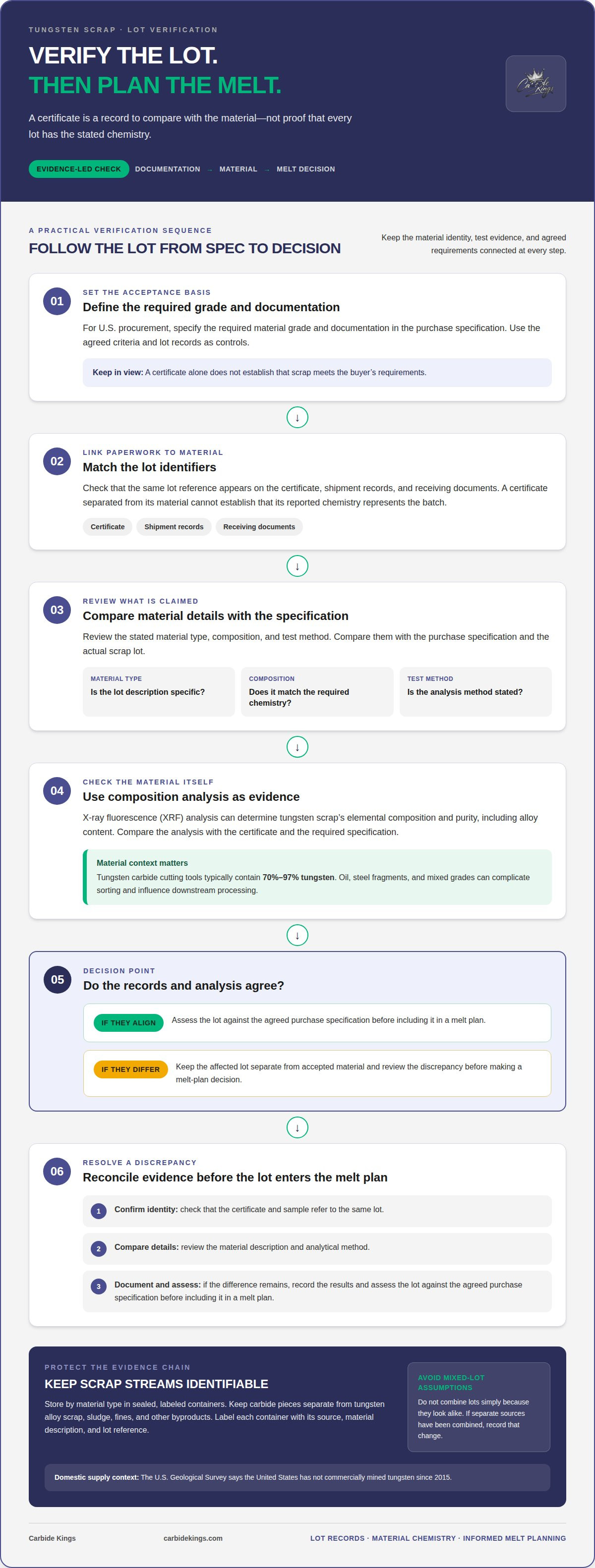
Certification and traceability link a material description and test record to a specific scrap lot. This matters because a certificate separated from its material cannot establish that the reported chemistry represents the batch being procured.
Match lot identifiers across the certificate, shipment records, and receiving documents. Review the stated material type, composition, and test method, then compare them with the purchase specification. X-ray fluorescence (XRF) analysis can determine tungsten scrap’s elemental composition and purity, including alloy content. In the United States, tungsten supply also has a domestic context: the U.S. Geological Survey says the country has not commercially mined tungsten since 2015.
For U.S. procurement, specify the required material grade and documentation in the purchase specification. Use those agreed criteria and lot records as controls: a certificate alone does not establish that the scrap meets the buyer’s requirements.
Certificate and Test Result Discrepancies
A discrepancy between a certificate and a test result means the documented chemistry differs from the analysis of the material received. Relying on either record without resolving the difference can lead to incorrect assumptions about the batch’s composition.
Keep the affected lot separate from accepted material while reviewing the discrepancy. Confirm that the certificate and sample refer to the same lot, then compare the material description and analytical method. If the difference remains, document the results and assess the lot against the agreed purchase specification before including it in a melt plan. This keeps the decision based on evidence, not an unverified label.
Scrap segregation and cross-contamination prevention
Segregation keeps each tungsten scrap stream identifiable from collection through storage and shipment. It preserves the value of lot records and reduces the chance of mixed material entering a process with an assumed composition. Store scrap by material type in sealed, labeled containers. For example, keep carbide pieces separate from tungsten alloy scrap, and label each container with its source, material description, and lot reference.
Build separation into the work area. Place clearly marked collection bins where scrap is generated, such as at a machining station or tool-change area. Keep containers closed between additions, and use dedicated handling equipment where practical. Shared bins or tools can transfer oil, steel fragments, or other residue between batches, making the resulting lot harder to characterize.
- Identify each stream: label containers with the material type and lot reference, not just a broad term such as “metal scrap.”
- Separate different forms: keep solid carbide pieces apart from sludge, fines, and other byproducts so their handling and assessment remain distinct.
- Control additions: direct each new batch into its designated container and avoid combining lots simply because they look alike.
- Record handling conditions: note relevant storage details, including temperature where the receiving process requires it.
Before shipment, reconcile container labels with the accompanying lot records. If material from separate sources has already been combined, record that change rather than presenting the contents as a single, uniform stream. Clear separation makes downstream sorting more practical and helps buyers assess each lot on its own terms.
For procurement planning, keep the material category aligned with its intended use. Reviewing tungsten scrap materials can help connect a defined scrap stream with the appropriate material category.
Scrap purity and processing value
Purity affects how a tungsten scrap lot fits a production specification and what processing it needs. Limits depend on the material type and intended use, so sludge figures should not be applied to every carbide or alloy batch.
Acceptable Impurity Limits
Impurity limits are the maximum unwanted constituents allowed for a defined material and application. They matter because a limit suitable for one feedstock may not suit another. For tungsten sludge, preferred maximums are below 5% non-metallic content and below 0.03% phosphorus; sludge typically contains at least 50% tungsten. These values describe sludge, not universal acceptance limits for cemented carbide or tungsten alloys.
Use the applicable purchase specification and intended chemistry as the acceptance basis. Mixed carbide and tungsten alloy lots have different compositions, so one general impurity threshold cannot describe both. Record the material category and its required limits before evaluating purity.
Laboratory Tests for Composition and Purity
X-ray fluorescence (XRF) analysis can determine tungsten scrap’s elemental composition and purity, including alloy content. The test helps compare a sample’s measured elements with the material description and intended specification. It is especially relevant when alloy constituents could affect how a lot is classified.
Sampling still matters: a result represents only the material tested, so the sample must correspond to the lot under review. Link sample identification to the lot record, and interpret the reported composition against the correct material category. Without that context, a test result may not accurately describe the batch.
Identification Errors and Production Effects
Identification errors assign scrap to the wrong material category or composition. In a furnace plan, this can make the expected feed chemistry differ from the material charged. The mismatch may require adjustment or further processing, or lead to rejection against the finished product specification.
These outcomes can reduce usable yield when material cannot meet the target chemistry. They can also create defects if composition falls outside production requirements. Corrections add handling and analysis work, while delayed or rejected output disrupts production schedules. Matching the lot identity, test result, and purchase specification helps contain these risks before charging.
How can tungsten scrap certifications and material traceability be verified?
Verification links a certificate to the exact scrap lot it describes. Maintain a consistent record trail from collection through shipment and receipt so the material identity, analysis, and purchasing criteria stay aligned.
Start with the lot identifier. It should appear on the certificate, container label, shipping documents, and receiving record. Compare the material description across all records. For example, a certificate describing tungsten alloy should not accompany a container recorded as carbide scrap without an explanation. Keep records for split or combined lots linked to their original batches.
Next, review what the certificate actually establishes. Check that it identifies the tested material, reports its composition, and names the analytical method. X-ray fluorescence (XRF) can determine tungsten scrap’s elemental composition and purity, including alloy content. The sample must represent the identified lot; otherwise, even a valid test result may not describe the shipment.
- Match identifiers: reconcile the certificate’s lot reference with labels and shipment records.
- Compare descriptions: confirm the material category and stated composition align with the purchase specification.
- Review the analysis: read the reported elements and method, then relate results to the intended material grade.
- Record changes: document any sorting, splitting, or combining that affects lot identity.
For U.S. procurement, set acceptance criteria in the purchase specification and use them to evaluate certificates and test results. A document should support the transaction’s material description, not replace clear lot identification or analytical evidence. If records conflict, isolate the affected lot and resolve the discrepancy against the agreed specification before it enters production.
For scrap procurement aligned with a defined material category, explore tungsten scrap options and identify the type that fits your operation.
Carbide Kings: Tungsten Hard Scrap
Carbide Kings supplies Tungsten Hard Scrap for industrial buyers sourcing material for manufacturing and metallurgical use. Its offerings also include Tungsten Soft Scrap, Carbide scrap, and Tungsten Alloys. Selecting the category that matches your intended feedstock helps align procurement with your material requirements.
Use the certification and traceability checks above to assess documentation and lot identity as part of your purchasing process. To source tungsten or carbide scrap, contact Carbide Kings and discuss your material requirements.
Make Your Next Scrap Decision With Confidence
Managing melt chemistry failure risks from unverified tungsten scrap certifications starts with matching your sourcing decisions to the material your operation needs. Apply that discipline to every procurement cycle: define the material category, align it with its intended use, and focus the purchasing conversation on your production requirements.
Carbide Kings offers Tungsten Hard Scrap, Tungsten Soft Scrap, and Carbide scrap for industrial buyers. Whether you’re planning a purchase or deciding which category fits your operation, discuss your material requirements with Carbide Kings.
Contact Carbide Kings about tungsten scrap to discuss your sourcing needs. A focused conversation can help you move forward with a clearer material plan and keep procurement aligned with production.
Frequently Asked Questions
How does tungsten scrap composition affect melt chemistry and alloy quality?
Scrap composition determines which elements enter the melt, so feedstock affects whether the final alloy meets its target chemistry. For example, cemented carbide contains a binder such as cobalt or nickel, while tungsten alloys contain other alloying elements. If the charge plan assumes a different material category, the resulting blend may need correction or fail to meet the required specification. Match material identity to its intended use.
What contaminants are commonly found in tungsten scrap, and how do they affect melting?
Scrap may carry oil, steel fragments, or handling residue, while mixed material can introduce elements from another alloy grade. Cobalt and nickel, for example, are common binders in cemented carbide, but their presence matters if the material is mistakenly treated as another tungsten feedstock. Contaminants or unexpected constituents can alter melt composition and complicate efforts to meet product requirements.
What failures can result from unverified tungsten scrap certifications?
Unverified certifications can lead operators to plan a charge using chemistry that the delivered material does not match. The mismatch may require adjustments, extra testing, reprocessing, or holding the material while its disposition is decided. If the final composition misses the product specification, the batch may be rejected or need corrective work. These are practical melt chemistry failure risks from unverified tungsten scrap certifications, not merely paperwork issues.
What U.S. regulations or industry standards apply to tungsten scrap certification and procurement?
For U.S. procurement, define the required material grade and documentation in the purchase specification, then use those agreed criteria and lot records to assess each batch. A certificate alone does not establish that the scrap meets the buyer’s requirements.


