
China’s export volume of ammonium paratungstate plummeted by nearly 70% in 2025, a shift that has fundamentally changed how industrial facilities view their waste. If you're managing a shop floor or procurement desk, you already know that rising material costs and strict corporate sustainability reporting aren't just hurdles. They are direct threats to your margins. Understanding the environmental benefits of tungsten recycling is the most effective way to turn these logistical headaches into a streamlined revenue stream.
You'll discover how recycling reduces mining impact, lowers carbon footprints, and secures your industrial supply chain while maximizing your facility’s ROI. This guide provides the clear data points you need for your next sustainability report and a professional path to process your tungsten hard scrap, soft scrap, and alloys. We'll preview the impact of the EU Critical Raw Materials Act and show you how to turn industrial waste into a predictable asset. It's time to replace supply chain uncertainty with a reliable, transparent process that rewards your facility for its environmental responsibility.
Key Takeaways
- Understand why tungsten is classified as a critical mineral and how recovery efforts protect limited global reserves.
- Learn how to slash your facility's carbon footprint by leveraging the environmental benefits of tungsten recycling, which requires significantly less energy than refining raw ore.
- Discover how a circular economy for high-speed steel and carbide tools reduces your dependence on volatile foreign mineral imports.
- Shift your operations from simple waste disposal to a high-yield revenue strategy through effective material sorting and employee education.
- Streamline your logistics with a 24-hour processing cycle that keeps your tungsten hard scrap and alloys moving profitably.
Why Tungsten Recycling is Critical for Global Environmental Sustainability
Tungsten recycling is the methodical recovery of wolfram-based materials from industrial end-of-life products. It's the bridge between a wasteful linear model and a high-efficiency circular economy. Most industrial operations still follow a "take-make-dispose" pattern. This approach is outdated. It sends high-value alloys to landfills where they serve no purpose. By reclaiming your tungsten hard scrap, soft scrap, and alloys, you stop this waste. You turn a potential environmental liability into a strategic asset. The unique Tungsten properties and uses that make it indispensable in manufacturing also make it too valuable to throw away. It's a critical mineral with a finite global supply. Recycling isn't just a green initiative; it's a necessity for industrial survival.
The environmental benefits of tungsten recycling extend far beyond your facility's walls. When you choose to recycle, you directly reduce the pressure on global mining operations. This shift protects ecosystems and secures the materials needed for high-tech applications. It's a straightforward way to align your procurement needs with modern sustainability requirements. Your scrap is a concentrated resource that belongs back in the production cycle, not in the ground.
Reducing the Ecological Impact of Primary Mining
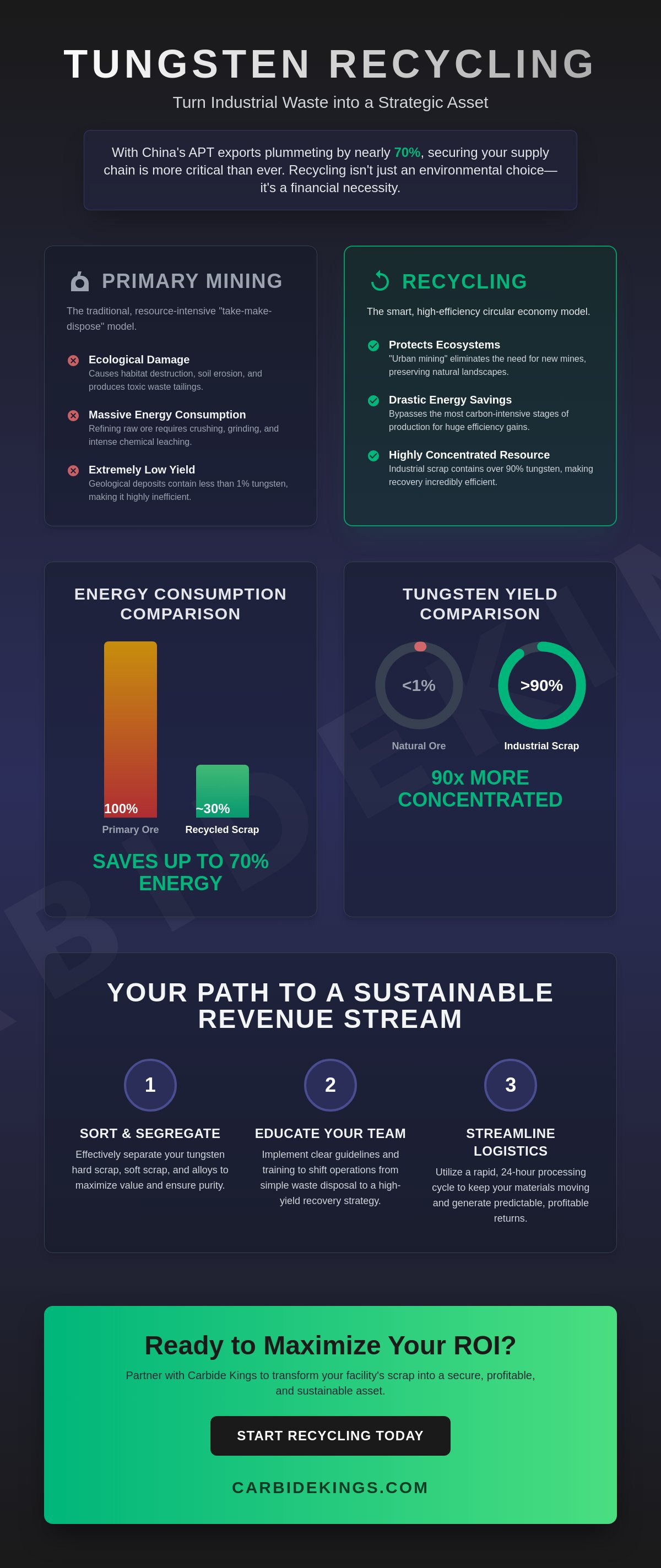
Traditional open-pit tungsten mining is a heavy-duty process. It often leads to significant habitat destruction and soil erosion. Large-scale excavations displace local wildlife and alter natural landscapes permanently. Mining also produces tailings. These are toxic waste piles that can leach harmful chemicals into local water tables if not managed perfectly. Using recycled feedstock eliminates these risks. This process is often called "urban mining." It's a cleaner, more efficient alternative to geological extraction. It allows you to source high-quality tungsten without the ecological baggage of a new mine.
Preserving Finite Natural Resources
Natural tungsten ore is surprisingly lean. Most geological deposits contain less than 1% tungsten. In contrast, recycled tungsten carbide inserts and alloys often contain over 90% tungsten. This makes scrap a far more concentrated and efficient resource than raw earth. By prioritizing the environmental benefits of tungsten recycling, we extend the lifespan of known global reserves. This preservation is vital. We need these minerals for future aerospace, medical, and energy technologies. Recycling ensures that we don't squander our limited supply on one-time use. It keeps the industrial world moving forward without exhausting the planet's natural wealth.
Energy Conservation and Carbon Footprint Reduction in Carbide Processing
Energy efficiency isn't just a corporate buzzword. It's a critical line item on your balance sheet. Refining raw tungsten ore is a massive energy sink that requires crushing, grinding, and intense chemical leaching. Processing tungsten hard scrap or alloys skips these brutal stages entirely. One of the primary environmental benefits of tungsten recycling is the ability to save up to 70% of the energy compared to primary mining. This efficiency gap is a powerful tool for facilities looking to slash operational costs while meeting new green mandates.
Industrial recycling reduces energy consumption by bypassing the most carbon-intensive stages of primary metal production. For example, the "Zinc Process" for hard scrap carbide is a highly efficient physical recovery method. It avoids the energy-heavy chemical digestion required for raw ore by using molten zinc to break down the cobalt binder. This allows for the recovery of pure carbide powder with minimal power input. By choosing recycled feedstock, you directly lower your facility's total energy demand and simplify your compliance with strict corporate sustainability reporting.
Ore vs. Scrap: The Energy Efficiency Gap
A detailed USGS report on tungsten recycling confirms that scrap recovery is a cornerstone of industrial efficiency. It significantly reduces the reliance on heavy machinery during the procurement phase. Every pound of recycled material means less fuel burned at a mine site and less electricity used in a refinery. This streamlined process allows manufacturers to maintain high production standards without the massive power overhead associated with virgin materials. It's a straightforward way to keep your materials moving through the cycle profitably.
Minimizing Greenhouse Gas Emissions
Sourcing material domestically changes the math on your carbon footprint. Most primary tungsten is mined far from North American factories, and China's recent export controls, implemented on January 6, 2026, have made international logistics even more complex. Relying on global shipping lanes for raw ore creates a massive "transportation carbon" debt. In contrast, national scrap logistics are faster, cleaner, and far more reliable. This reduction in shipping distance is a major win for your environmental metrics.
Using recycled materials is a proven way to meet Scope 3 emission targets. These regulations require manufacturers to account for the carbon impact of their entire supply chain. When you integrate recycled tungsten alloys into your production cycle, you instantly improve your sustainability data. You aren't just managing waste; you are optimizing your entire carbon profile for a more competitive future.
Strengthening the Circular Economy and Supply Chain Security
The circular economy is more than a sustainability goal. It's a strategic framework for keeping high-speed steel and tungsten carbide tools in a continuous loop of productivity. In this model, end-of-life products aren't waste; they are the feedstock for the next generation of industrial tools. Research into the Sustainable Recycling and Circular Economy of Tungsten highlights how this closed-loop system stabilizes the market. By reclaiming your tungsten hard scrap and alloys, you help build a self-sustaining industrial ecosystem that doesn't rely on the whims of global mining giants.
Global supply chains are increasingly weaponized. With China controlling over 80% of global tungsten production and implementing strict export controls as of January 6, 2026, the risk of disruption is at an all-time high. One of the key environmental benefits of tungsten recycling is the creation of a domestic supply buffer. This internal resource shields your facility from the extreme price volatility often seen in the primary mineral market. It ensures that critical materials stay within our borders, supporting high-stakes sectors like defense and aerospace manufacturing without interruption.
Securing the Domestic Industrial Supply Chain
A robust national recycling network is your best defense against geopolitical uncertainty. Every pound of scrap processed domestically is a pound of resource secured for local industry. When you recycle your tungsten soft scrap and alloys, you contribute to a resilient supply chain that isn't vulnerable to international trade disputes or shipping delays. This proactive approach keeps your shop floor running and your procurement costs predictable. It’s a straightforward way to maintain a competitive edge in a volatile global market.
Reducing Industrial Landfill Pressure
Dumping heavy metals into landfills carries a high environmental and financial price. Heavy industrial waste can lead to long-term soil contamination and requires expensive specialized disposal. Implementing a dedicated recovery program helps your facility comply with "Zero Waste to Landfill" initiatives while avoiding rising disposal fees. Turning your waste into revenue is a much smarter move than paying to bury it. By prioritizing the environmental benefits of tungsten recycling, you protect the local environment and improve your bottom line simultaneously. It's a clean, efficient way to manage your facility's output while supporting a more secure industrial future.
How to Implement a Sustainable Carbide Recycling Program
Moving from simple waste disposal to a revenue-generating strategy requires a shift in shop floor culture. It's about recognizing that your scrap is actually a high-value commodity. Start by integrating recycling into your existing LEAN or ISO 14001 workflows. This ensures the process is documented, repeatable, and efficient. Maximizing the environmental benefits of tungsten recycling depends entirely on how well you manage material at the source. Educating your team on the value of these materials prevents them from being tossed into general metal bins.
Accurate weighing and material identification are the next steps. Don't guess the weight or the grade. Use calibrated scales and clear documentation to track your output. When your team understands that every pound of tungsten hard scrap has a specific market value, they treat it with more care. This precision allows you to turn a logistical headache into a predictable monthly revenue stream. It also provides the clear data points you need for your corporate sustainability reports.
Implementing a Scrap Segregation System
A successful program starts with a clean segregation system. Mixing different metals destroys the value of your scrap and complicates the refining process. Use dedicated, labeled containers to keep your materials pure. Follow this simple checklist for effective sorting:
- Tungsten Hard Scrap: Collect used carbide inserts, end mills, and drills in heavy-duty bins.
- Tungsten Soft Scrap: Use sealed containers for grinding sludge, powders, and floor sweepings to prevent loss.
- Tungsten Alloys: Separate high-density alloys from standard tool steels.
Preventing contamination with steel or other alloys is vital. It increases both the environmental and financial value of your shipment. Clean scrap requires less energy to process and yields a higher return for your facility. This simple step ensures your waste is processed responsibly and efficiently.
Partnering with National Procurement Experts
The most effective sustainability programs are those that remove logistical friction between the shop floor and the refinery. You need a partner who offers transparency, speed, and comprehensive logistical support. Look for buyers who handle the heavy lifting, including shipping and national logistics. This allows your team to stay focused on production while your scrap is processed responsibly. Reliable partners provide clear documentation that plugs directly into your corporate sustainability reports. It makes the entire transition feel as simple as a basic retail transaction.
Ready to upgrade your shop floor efficiency? Request a quote for your tungsten scrap and see how easy it is to start your recycling program.
Maximize Environmental and Financial ROI with Carbide Kings
Efficiency is the final piece of the sustainability puzzle. You've already sorted your material and integrated recovery into your shop floor culture. Now you need a partner to close the loop. Carbide Kings provides the streamlined solution for national tungsten procurement. We remove the traditional barriers that make recycling feel like an administrative chore. Realizing the full environmental benefits of tungsten recycling requires more than just good intentions; it requires a process that values your time as much as your scrap.
Our no-hassle shipping process is designed to eliminate administrative waste. We handle the complex paperwork and logistics so your team can stay focused on core production. This professional approach ensures that your tungsten hard scrap, soft scrap, and alloys are processed with total transparency. By choosing a partner that prioritizes speed and reliability, you transform your environmental policy from a static document into a dynamic, revenue-generating engine. We act as a proactive partner in meeting your corporate sustainability goals, providing the clear documentation you need for your next audit.
Streamlined Logistics for National Sustainability
Managing bulk shipments across the country shouldn't be a headache. Carbide Kings handles the heavy lifting of logistics for every transaction. We utilize efficient, consolidated freight networks to move scrap metal, which further reduces the carbon footprint of your waste management. This methodical approach ensures that your materials are transported safely and responsibly. It’s the most direct path to a cleaner operation. Sell your tungsten hard scrap today to start your recycling program and see how simple industrial logistics can be.
Fast Processing for Immediate Industrial Re-use
Time is money on the shop floor. Our 24-hour processing cycle keeps industrial materials moving through the cycle without delay. This rapid turnover is essential for a responsive circular economy. It ensures that reclaimed tungsten is ready for re-entry into the manufacturing stream as quickly as possible. Our rapid payout system provides the immediate liquidity you need for new tool procurement, creating a seamless financial cycle that rewards your green initiatives.
The work is as good as done when you partner with experts who have refined the procurement process to perfection. Don't let your valuable alloys sit in a bin when they could be securing your supply chain. Get a quote for your carbide scrap today and join the green industrial revolution. It’s a straightforward, lucrative way to maximize your facility's ROI while protecting the planet's finite resources.
Secure Your Industrial Future with Sustainable Procurement
The path to a more resilient and profitable facility starts with a smarter approach to industrial waste. You've seen how reclaiming your tungsten hard scrap, soft scrap, and alloys directly slashes energy consumption and protects your supply chain from global market shifts. By prioritizing the environmental benefits of tungsten recycling, you stop paying landfill fees and start generating immediate liquidity for your operations. It's a strategic move that aligns your shop floor with strict corporate sustainability reporting requirements while improving your bottom line.
Carbide Kings handles the heavy lifting so you can stay focused on production. We provide specialized expertise and nationwide logistics support for bulk industrial loads, ensuring your materials move quickly from the shop floor to the refinery. Our 24-hour material processing and rapid payment system mean you don't have to wait to see the results of your sustainability efforts. We've refined the process to remove every administrative hurdle, making it easier than ever to manage your facility's output responsibly.
Turn your tungsten scrap into cash and support a greener industry with Carbide Kings. Let's build a more sustainable, self-reliant industrial future together.
Frequently Asked Questions
What are the main environmental benefits of recycling tungsten carbide?
Recycling prevents the need for new open-pit mines and the habitat destruction they cause. It eliminates the production of toxic tailings that can leach into local water tables and ecosystems. By reclaiming your scrap, you protect natural landscapes and preserve finite resources for future high-tech applications.
How much energy is saved by recycling tungsten compared to mining?
You save up to 70% of the energy normally required for primary mining and refining. Extracting raw ore requires massive power for crushing, grinding, and chemical leaching. Recycling bypasses these carbon-intensive stages, allowing for a much more efficient production cycle that lowers total industrial energy demand.
Does tungsten recycling reduce my company’s carbon footprint?
Yes, it significantly lowers your corporate carbon footprint by reducing reliance on heavy mining machinery. One of the primary environmental benefits of tungsten recycling is the sharp decrease in greenhouse gas emissions. Sourcing material from national scrap also cuts down on the transportation carbon associated with global shipping lanes.
Can all types of tungsten scrap be recycled effectively?
Most industrial tungsten can be processed successfully if it's properly segregated at the source. This includes tungsten hard scrap like inserts and end mills, soft scrap such as grinding sludge, and various tungsten alloys. Keeping these materials free from steel contamination ensures they return to the manufacturing loop with maximum recovery efficiency.
Why is tungsten considered a critical mineral for the environment?
Tungsten is essential for clean energy technologies and high-efficiency manufacturing tools. It's classified as a critical mineral because global reserves are finite and increasingly subject to geopolitical export controls. Recovering this metal ensures we don't exhaust the supply needed for medical equipment, aerospace components, and energy-efficient industrial applications.
How does recycling tungsten carbide support the circular economy?
It creates a closed-loop system where end-of-life tools become the feedstock for new industrial products. This model reduces reliance on volatile foreign imports and keeps high-value materials within the national economy. It transforms what was once considered waste into a strategic asset that supports long-term industrial sustainability.
Is it better to sell carbide scrap to a specialized buyer or a local scrap yard?
Specialized buyers are the superior choice because they understand the specific value of various tungsten grades. Local yards often lack the expertise to identify complex tungsten alloys or the equipment to process soft scrap correctly. A specialized partner ensures you receive a fair price and that your material is processed according to professional industrial standards.
What happens to tungsten carbide after it is recycled?
The material is typically processed back into high-purity tungsten powder through methods like the Zinc Process. This powder is then used to manufacture new carbide inserts, wear parts, and high-performance alloys. The quality of the recycled material is identical to virgin tungsten, making it a perfect substitute in any high-precision industrial application.


