

Copper can be recycled without losing its properties, and it ranks second only to silver in thermal and electrical conductivity. Sourcing tungsten copper scrap solids for electrical contact production starts with understanding copper’s recycling value and its role in electrical applications.
For manufacturers, understanding copper’s contribution helps put scrap sourcing into context. This reference explains how copper recycling works and why copper is widely used in electrical industries, then connects those points to tungsten-copper scrap solids for electrical contacts.
This overview gives you practical context for evaluating the materials involved, from copper’s role in electrical applications to how recycling supports material use. Use it as a foundation when assessing sourcing options.
Key Takeaways
- Trace copper recycling from recovered material through processing to reuse, and see how recycled feedstock fits alongside domestic production.
- Understand the roles of smelting and refining in copper production, including how those steps relate to material used by electrical industries.
- Connect copper’s use in electrical busbars with the material considerations behind electrical contact production.
- For industrial tungsten and carbide scrap needs, Carbide Kings offers Tungsten Hard Scrap, Tungsten Soft Scrap, Carbide scrap, and Tungsten Alloys.
Copper recycling
Copper recycling returns recovered metal to production without loss of its properties. In the United States, domestic copper supply combines mine production, processing, and recycled feedstock.
Import, Transport, and Recycling Regulations
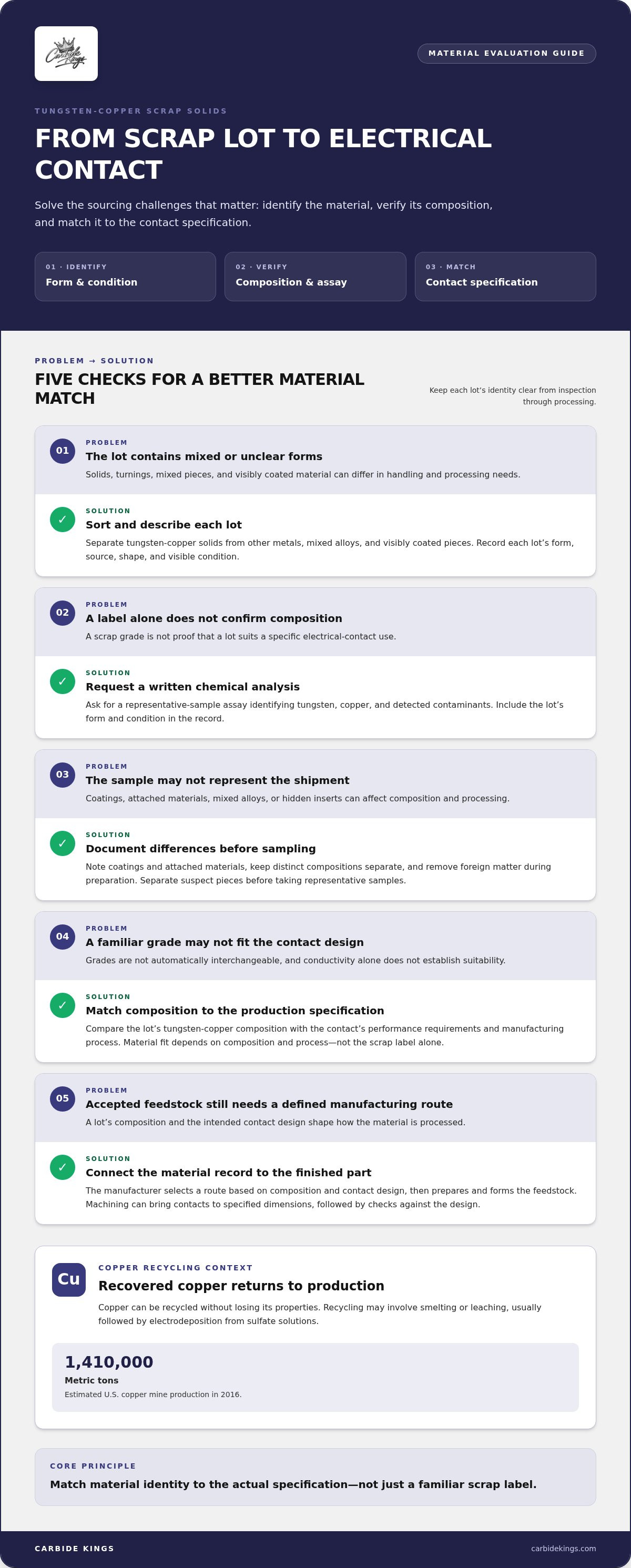
Import, transport, and recycling regulations are separate compliance steps for a scrap shipment and its processing. For U.S. tungsten-copper scrap, identify the customs classification for imports, applicable shipment requirements during transport, and environmental requirements for the recycling activity. The material’s classification and the operation being performed determine which rules apply. Copper recycling may involve smelting or leaching, usually followed by electrodeposition from sulfate solutions.
Scrap Prices by Content and Form
Scrap value reflects recoverable metal content and the form in which the material can be processed. The tungsten and copper proportions affect a lot’s potential yield, while solids, turnings, and mixed pieces can differ in handling and processing needs. Separate, identifiable solids are easier to evaluate by composition than mixed forms, so describe the material and its condition accurately when requesting a price.
Grades and Compositions for Electrical Contacts
A scrap grade groups material by composition, condition, and suitability for a defined manufacturing use. For electrical contacts, match the lot’s tungsten-copper composition to the production specification rather than assuming every grade is interchangeable. Compare the contact’s performance requirements with the available material. The right fit depends on composition and production process, not the scrap label alone.
Specifications and Chemical Analyses
A chemical analysis reports the elemental composition of a representative material sample. Request a written assay identifying tungsten, copper, and detected contaminants, alongside the lot’s form and condition. Also document coatings, attached materials, and any mixed alloys or hidden inserts, since these can affect processing and composition. Separate suspect pieces before sampling; otherwise, a sample may not represent the shipment. U.S. copper mine production was estimated at 1,410,000 metric tons in 2016.
Copper use in electrical industries
Copper carries electrical current in components such as busbars and contact systems. Its conductivity makes copper composition and material condition relevant when selecting feedstock for electrical manufacturing.
Scrap Inspection, Sorting, and Preparation
Inspection and sorting establish a scrap lot’s composition, condition, and suitability for a manufacturing route. When sourcing tungsten copper scrap solids for electrical contact production, separate tungsten-copper solids from other metals, mixed alloys, and visibly coated pieces. Record each lot’s form and source, then compare its composition with the contact specification.
Prepare sorted material by removing attached foreign matter and keeping distinct compositions separate. Document visible differences, including shape and surface coatings, and retain representative samples for analysis. This helps manufacturers assess consistency before processing. Copper’s role in electrical equipment makes material identity important, but conductivity alone does not establish whether a scrap lot suits a contact design.
Processing Scrap Solids into Contacts
Processing turns accepted scrap into contact components through material preparation, forming, and finishing. A documented inspection supports sourcing tungsten copper scrap solids for electrical contact production by connecting the lot’s characteristics to the manufacturing specification. The manufacturer chooses a processing route based on composition and contact design, then prepares and forms the feedstock to meet the intended requirements.
After forming, machining can bring contacts to specified dimensions, followed by checks against the design. The finished part must suit its application, not merely contain copper and tungsten. Copper alloys used in electrical equipment illustrate why composition matters: material choices serve defined functions. For related industrial scrap sourcing, explore tungsten and carbide scrap materials.
Carbide Kings: Tungsten Hard Scrap
Carbide Kings supplies Tungsten Hard Scrap to industrial buyers sourcing tungsten materials for manufacturing. Related offerings include Tungsten Soft Scrap, Carbide scrap, and Tungsten Alloys. These materials suit production needs involving tungsten or carbide feedstock; tungsten-copper contact requirements, however, depend on the specified composition and manufacturing process.
Use your material requirements to guide the next step: identify the scrap category and how it fits your production needs. For tungsten and carbide scrap sourcing, contact Carbide Kings to discuss your requirements.
Make Your Next Material Decision
As you move from material research to procurement, turn the contact design into a clear purchasing brief. Define the composition and acceptable form required by your manufacturing route, then keep tungsten-copper contact feedstock distinct from other tungsten materials. This focuses supplier discussions and helps prevent a broad scrap category from being mistaken for a production-ready match. Sourcing tungsten copper scrap solids for electrical contact production starts with this discipline: match material identity to the actual specification, not just a familiar label.
Carbide Kings offers Tungsten Hard Scrap, Tungsten Soft Scrap, and Carbide scrap for industrial material needs. If those categories fit your sourcing plan, contact Carbide Kings about tungsten and carbide scrap. Keep your requirements specific and move your procurement decision forward with confidence.


