
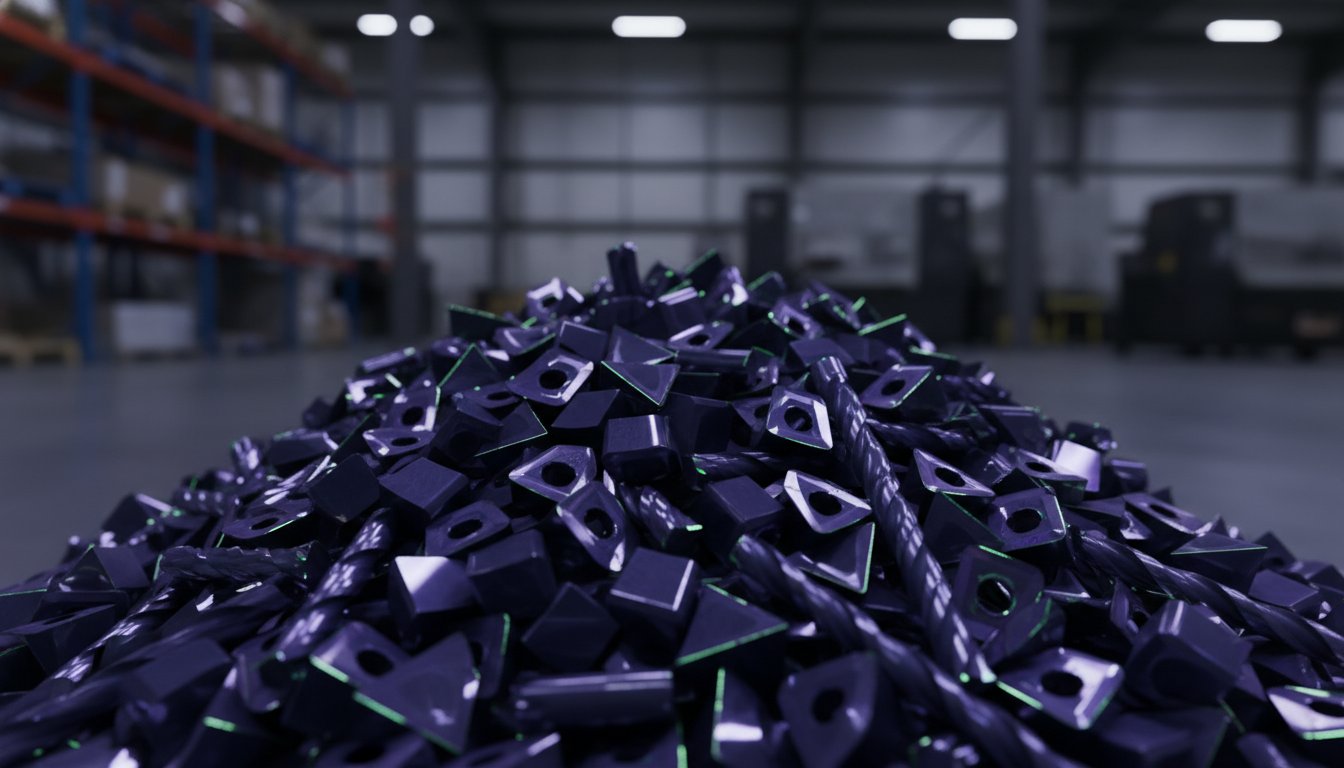
Did you know that the price of tungsten carbide powder surged by over 200% between early 2024 and January 2026? With China controlling over 80% of global production and implementing strict export controls this year, your workshop waste has become a high-stakes commodity. You likely suspect that your local general scrap yard isn't offering the true carbide scrap value for your used inserts and end mills. It's a common frustration to feel low-balled by buyers who don't understand the technical specifications of your industrial materials.
We're here to change that. You'll learn exactly what drives market volatility and how to distinguish high-value tungsten from lower-grade alloys to maximize your industrial recycling payout. This guide provides a clear framework for sorting your scrap to ensure the highest ROI on every shipment. We'll walk through current global market drivers, simplified logistics for heavy bulk shipping, and how to partner with a national expert to secure a fast and professional payout. It's time to turn your heavy metal bulk into a streamlined revenue stream.
Key Takeaways
- Identify the global supply constraints and tungsten market shifts that are driving carbide scrap value to record highs in 2026.
- Differentiate between hard scrap solids and soft scrap powders to understand which forms offer the highest refinery yields.
- Learn how to accurately separate tungsten carbide from tool steel to protect your bin's purity and avoid undervalued quotes.
- Implement a streamlined five-step material audit to remove attachments and prepare your bulk shipment for a professional payout.
- Access a direct procurement process that handles the logistical heavy lifting and provides rapid 24-hour material processing.
What Determines Carbide Scrap Value in 2026?
Your carbide scrap value isn't a static number. It's the market-driven price for specialized tungsten-cobalt alloys. In 2026, this value is higher than ever because tungsten, also known as Wolfram, has been cemented as a critical raw material for global defense, aerospace, and energy sectors. You aren't just selling heavy metal; you're providing a strategic resource that is increasingly difficult to source from primary mines.
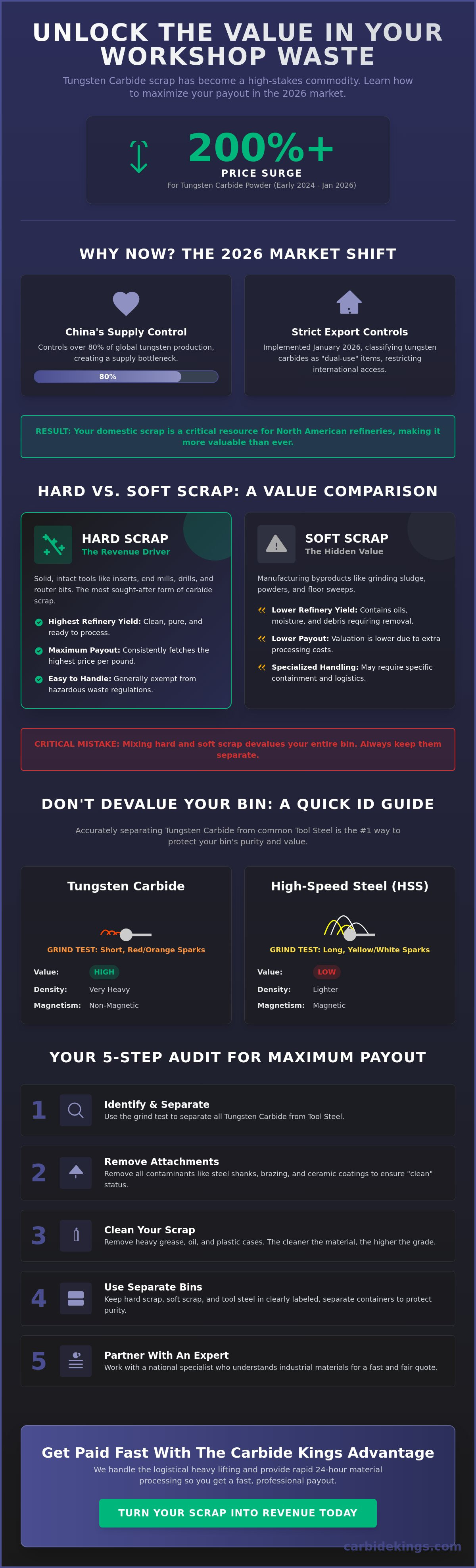
Global supply chain shifts in early 2026 changed the game for domestic sellers. On January 6, 2026, China implemented strict export controls on tungsten carbides by classifying them as dual-use items. Since China controls over 80% of global production, these restrictions tightened the market instantly. This shift makes your domestic scrap more valuable to North American refineries that need to bypass international bottlenecks. When you understand Tungsten carbide properties, you understand why this material is indispensable in high-heat and high-wear environments.
The Role of Tungsten Purity
Purity is the primary driver of your payout. Refineries look for materials with 90% or higher tungsten content because they offer the best yield during the recycling process. Tungsten carbide is a composite of tungsten and carbon atoms. If your scrap is "clean," meaning it's free from attachments, you'll secure the highest premium. Contaminants like brazing, steel shanks, or ceramic coatings require additional processing steps. These extra steps cost time and energy, which naturally lowers the final offer price you receive from a buyer. Keep your high-purity solids separate from mixed bins to protect your margins.
Cobalt and Secondary Alloy Impact
While tungsten is the star, the binder material matters too. Most industrial carbide uses cobalt to hold the tungsten grains together. Cobalt price volatility directly affects your carbide payout because it's an expensive, essential component of the alloy. High-cobalt grades might be tougher for machining, but they change the chemistry that refineries have to manage. You may also find secondary alloys like Tantalum or Titanium in certain specialized inserts. These elements can alter the valuation of your lot, sometimes increasing it if the concentration is high enough. Clean carbide remains the gold standard for refineries because it allows for a predictable, high-speed recovery process. Focus on removing heavy grease and plastic cases before shipping to ensure your material is graded at its highest possible potential.
Hard Scrap vs. Soft Scrap: A Value Comparison
The physical form of your material is the most significant factor affecting your final carbide scrap value. In the industrial recycling world, we categorize materials into two distinct groups: hard scrap and soft scrap. Hard scrap consists of solid, intact tools like drills and milling cutters. Soft scrap includes the byproduct of manufacturing, such as grinding sludge and floor sweeps. Refineries always prefer hard scrap because it offers a significantly higher tungsten yield with minimal processing effort. This preference creates a substantial pricing gap where solid pieces consistently fetch more per pound than powders or wet sludge.
Yield efficiency drives the market. When a refinery processes solid carbide, they know exactly what they're getting. Soft scrap is different. It often contains cooling oils, moisture, and debris that must be removed before the tungsten can be reclaimed. According to U.S. tungsten market data, the demand for high-yield secondary materials has intensified as primary mining costs rise. Consequently, the more "ready-to-melt" your material is, the higher the quote you'll receive. Mixing these two types is a mistake that will inevitably lower your total payout.
Environmental handling requirements also play a role in valuation. While solid carbide is generally exempt from hazardous waste regulations, wet sludge and fine powders often require specialized containment to prevent leaks or airborne contamination. This added logistical burden is why many general yards won't touch soft scrap. Working with a specialized procurement partner ensures these materials are handled safely while you capture the hidden value in your grinding waste.
Tungsten Hard Scrap: The Revenue Driver
Solid tools are the primary revenue drivers for any industrial recycling program. You should focus on collecting tungsten hard scrap such as indexable inserts, end mills, and router bits. These items are the most sought-after solids because their purity levels are high and easy to verify. Testing hard scrap is a straightforward process. A quick visual inspection or a simple density test can confirm the material's grade almost instantly. Because these items don't require complex chemical separation to remove oils or binders, they move through the supply chain faster, putting cash back into your business sooner.
Tungsten Soft Scrap: Hidden Potential
Don't overlook the hidden potential in your soft scrap. This category includes grinding dust, sludge, and floor sweeps that accumulate during tool sharpening or manufacturing. Reclaiming tungsten from sludge requires a multi-stage refining process to filter out contaminants and moisture. To maximize your return, you must store soft scrap correctly. Keep it in sealed, leak-proof containers and prevent further contamination from shop floor debris or mixed metals. If you keep your sludge clean and concentrated, you can still turn this "waste" into a significant asset for your facility.
Carbide vs. Tool Steel: Why Identification Matters
Identification is the deciding factor between a high-value payout and a disappointing check. High-Speed Steel (HSS) and Tungsten Carbide might look similar to an untrained eye, but their market values are worlds apart. If you allow even 5% steel to contaminate your carbide bin, you risk a significant downgrade of your entire quote. Refineries require high purity for the sustainable recycling of tungsten carbide; steel acts as a disruptive contaminant in their specialized furnaces. Protecting your carbide scrap value starts with a rigorous sorting process at the source.
Many shop professionals rely on the magnet test, but this method has limitations in 2026. While most tool steels are strongly magnetic, tungsten carbide can be weakly magnetic depending on its cobalt binder content. A weak pull doesn't always mean you're holding steel. Instead, focus on density. Carbide is nearly twice as heavy as steel. If you hold a 1-inch carbide bar in one hand and an identical HSS bar in the other, the carbide will feel remarkably dense. This "heft test" is often more reliable than a magnet for quick floor-side sorting.
Mechanical Identification Tips
Use the spark test for definitive proof. When you touch carbide to a grinding wheel, it produces very short, dull orange sparks that stay close to the wheel. Tool steel produces long, bushy, white or yellow sparks that explode into multiple branches. Visual cues also provide immediate help. Carbide typically has a dull, matte grey appearance and is non-porous. In contrast, HSS often has a shinier finish and may show signs of surface oxidation or rust that carbide resists. Always check the shank of the tool; many manufacturers laser-etch "HSS" or "Carbide" directly onto the metal to simplify your sorting task.
Common 'Imposter' Metals in the Shop
High-Speed Steel drill bits are the most common imposters in a scrap bin. They are durable and effective for many tasks, but they lack the tungsten concentration required to command a premium price. You should also watch for Stellite or other specialized cobalt alloys. While valuable, they have different chemical profiles and must be kept separate from your primary tungsten loads. Brazed tools present a unique challenge. These consist of a carbide tip joined to a steel shank. To maximize your return, you must either remove the steel shanks or accept a lower "brazed" rate that accounts for the weight of the attached steel. Clean, separated material is the only way to ensure you receive the full market value for your alloys.
How to Maximize Your Carbide Payout: A 5-Step Audit
Maximizing your carbide scrap value requires a disciplined approach to material handling. Don't let your profits leak through poor sorting or contaminated bins. If you follow this five-step audit, you'll ensure your facility operates at peak recycling efficiency while capturing the highest possible return on your industrial waste.
- Step 1: Separate by grade. Keep your solids, indexable inserts, and grinding sludge in distinct containers. Refineries offer different rates based on the processing required for each form as discussed in our previous sections.
- Step 2: Remove all attachments. Detach steel shanks from brazed tools and strip away plastic cases or heavy grease. Buyers will deduct the weight of these non-carbide materials from your total payout, so cleaning them beforehand protects your margins.
- Step 3: Verify weight accurately. Use a calibrated industrial scale to record your shipment weight. Precision here prevents discrepancies when your material arrives at the processing center and ensures transparency.
- Step 4: Monitor market trends. Consult a tungsten carbide scrap price guide to understand current valuation shifts. This ensures you sell when the market is in your favor and avoids the trap of outdated pricing.
- Step 5: Partner with a specialist. Skip the local general scrap yard. They often lack the specialized equipment to analyze tungsten purity and will offer lower blanket rates to cover their own risk.
The Cost of Contamination
Contamination is the fastest way to devalue your shipment. Dirt, oil, and moisture in your grinding sludge add artificial weight that will be removed during the drying process. A refinery only pays for the dry weight of the metal. If your sludge is 20% liquid, your check will reflect that 20% loss. Clean and dry scrap always receives the fastest processing and payment. Use sealed, heavy-duty buckets for shipping soft scrap. This prevents material loss during transit and keeps your shop floor clean. You can secure a professional quote for your clean materials to see the difference a specialist makes.
Bulk Shipping and Logistics
Logistics can eat into your ROI if you ship small, frequent loads. Aim to consolidate your materials until you reach at least 500 lbs. Shipping in bulk optimizes your freight-to-value ratio, allowing you to spread the cost of transport across a larger payout. National buyers offer better rates than local recyclers because they move massive volumes directly to refineries. Secure packaging is non-negotiable. Carbide is incredibly dense and heavy. Use reinforced pallets and steel banding to ensure your shipment arrives intact and ready for rapid 24-hour processing once it reaches the facility.
Get Paid Fast: The Carbide Kings National Advantage
You've done the hard work of sorting, cleaning, and auditing your material. Now it's time to realize the actual carbide scrap value of your inventory. We offer a direct, no-nonsense procurement process designed specifically for industrial sellers across the USA. There's no need to deal with the uncertainty of local general scrap yards that don't understand the technical specifications of your specific alloys. We cut out the middleman to put more money back into your operation.
Once your shipment arrives at our facility, we initiate rapid 24-hour material processing. We don't believe in letting your capital sit idle on a warehouse floor. Our team performs transparent weighing and chemical analysis to ensure every cent of value is accounted for. You'll receive a clear report of your load's purity and weight before we finalize the transaction. This level of transparency is why machine shops nationwide trust us as their primary recycling partner.
We offer multiple fast payment options to suit your business needs. Whether you prefer secure wire transfers for immediate liquidity or traditional checks, we ensure the funds reach you without unnecessary administrative delays. Our goal is to make the financial side of recycling as sharp and efficient as the tools you use on your shop floor.
Streamlined National Logistics
Shipping hundreds of pounds of dense metal can be a logistical headache for many businesses. We assist with national shipping logistics to make bulk carbide loads as simple to move as a standard parcel. Our specialized focus on tungsten allows us to offer higher payouts than general yards because we have the direct refinery relationships they lack. We understand industrial tool wear and recognize the inherent value in spent inserts and end mills. By working with a partner that specializes in tungsten, you ensure your logistics costs don't eat into your final ROI.
Start Your Payout Process Today
Request a custom quote today based on your current inventory. We're interested in building long-term recycling partnerships with machine shops that value reliability and professional speed. We handle the logistical heavy lifting and the technical analysis so you can remain focused on your core production schedule. Your scrap shouldn't be a burden; it should be a consistent revenue stream that supports your bottom line. Let's turn your used alloys into capital today.
Get Your Carbide Scrap Quote Now
Secure Your Industrial Payout Today
You now have a professional framework to transform your shop floor waste into a significant financial asset. By distinguishing between high-yield solids and grinding sludge, you protect your bottom line from the common pitfalls of mixed-metal bins. Maximizing your carbide scrap value requires more than just a scale. It demands a partner with specialized tungsten metallurgy expertise who can verify material purity with professional precision.
Our process is built for speed and transparency. We handle the heavy lifting by providing national shipping support and rapid 24-hour material processing once your shipment arrives at our facility. Don't let your spent inserts, end mills, or alloys gather dust or settle for the low-ball offers of general recyclers. You've seen how global supply chain shifts have made your domestic scrap more valuable than ever. It's time to leverage that market momentum and turn your logistical headaches into a streamlined revenue stream.
Turn your scrap into revenue. Get a quote from Carbide Kings today. Take control of your industrial recycling program and turn those heavy bins into fast capital today. We're ready to help you finish the job.
Frequently Asked Questions
What is the current average carbide scrap value per pound?
The market value for carbide depends on the global price of tungsten and the specific purity of your material. In 2026, prices have seen significant volatility due to China's strict export controls on tungsten carbides. Clean, solid inserts command the highest premium. Because the market shifts daily, we recommend requesting a live quote to capture the most accurate carbide scrap value for your current inventory. We monitor global indices to ensure you receive a fair, competitive offer.
Is broken or chipped carbide worth less than whole tools?
Broken or chipped pieces are worth exactly the same as whole tools because value is determined by weight and material composition. As long as the material is solid tungsten carbide, its physical shape doesn't impact the refinery yield. You should collect all broken end mills and chipped inserts in your hard scrap bin. This ensures you capture every ounce of value from your tool waste without worrying about the condition of the items.
How do I tell the difference between carbide and high-speed steel (HSS)?
The most reliable field test is density because carbide is nearly twice as heavy as tool steel. If a drill bit feels surprisingly heavy for its size, it's likely carbide. You can also perform a spark test on a grinding wheel. Carbide produces short, dull orange sparks that stay close to the wheel. Tool steel creates long, bushy, white or yellow sparks that explode into multiple branches. Checking for laser-etched markings on the tool shank is also a quick identification method.
Does Carbide Kings buy grinding sludge and floor sweeps?
Yes, we buy grinding sludge, dust, and floor sweeps as part of our Tungsten Soft Scrap offerings. These materials require specialized refining to remove cooling oils and moisture before the tungsten can be reclaimed. To maximize your return, you should store these materials in sealed, leak-proof containers to prevent additional contamination. Clean, concentrated sludge always receives a better payout than material mixed with shop floor debris or other metal shavings.
Is there a minimum weight requirement for shipping carbide scrap?
While we process loads of various sizes, we recommend consolidating your material to at least 50 lbs to make shipping costs manageable. For industrial sellers, reaching a 500 lb threshold often provides the best freight-to-value ratio. This allows you to spread the cost of transport across a larger payout. If you have smaller amounts, you can still ship them, but the logistical efficiency improves significantly as your total weight increases.
How long does it take to receive payment after shipping my scrap?
We initiate payment within 24 hours of your material being processed and verified at our facility. Once your shipment arrives, our team performs a rapid analysis of the weight and purity to finalize your quote. We offer multiple fast payment options, including wire transfers and checks, to ensure you receive your funds without administrative delays. Our streamlined workflow is designed to get capital back into your business as quickly as possible.
Why shouldn't I just take my carbide to a local scrap yard?
Local general scrap yards often lack the specialized equipment needed to accurately analyze tungsten purity. Because they don't specialize in high-value alloys, they typically offer lower mixed metal rates to protect their own margins. A specialized partner understands the 2026 market drivers and has direct refinery relationships. This expertise allows us to offer more competitive payouts that reflect the true carbide scrap value of your tungsten.
Can I sell carbide inserts that are still attached to steel shanks?
You can sell brazed tools, but they will be valued at a lower rate than clean carbide solids. This is because the weight of the steel shank must be accounted for during the refining process. To get the highest ROI, we recommend removing the steel attachments before shipping. If you choose to leave them attached, your material will be graded as brazed carbide, which reflects the additional labor and processing required to separate the metals.


